SOC 2 is a compliance standard for service organizations, used to assess the security, availability, integrity, confidentiality, and privacy of the organization’s systems and operations. This voluntary standard was developed by the American Institute of Certified Public Accountants (AICPA) as a part of their Service Organization Control Reporting platform. The framework specifies how organizations should manage customer data.
What does SOC stand for?
SOC's full form is System and Organization Control, formerly known as Service Organization Control.
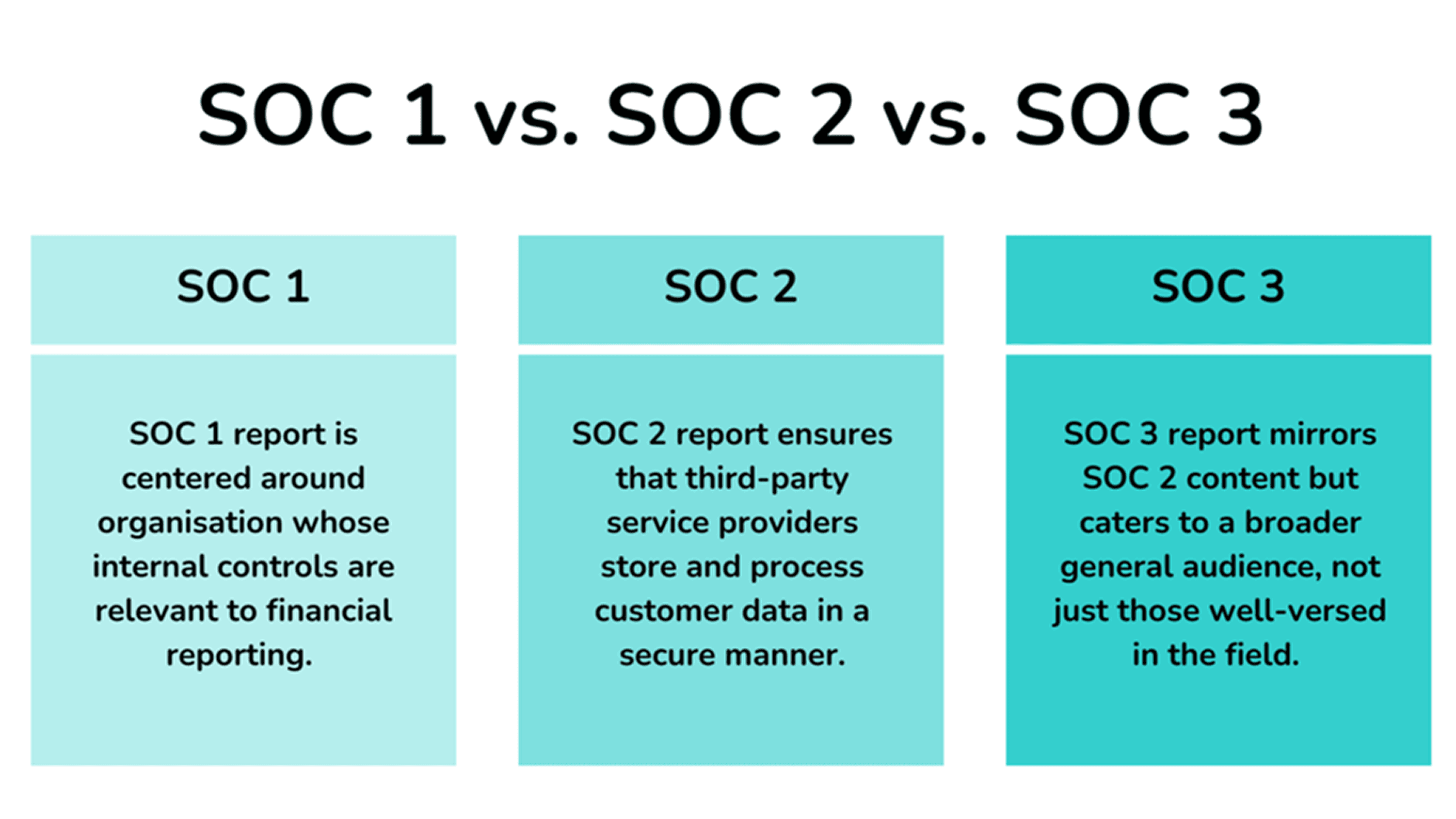
SOC 1 vs. SOC 2 vs. SOC 3
SOC 2 is the most common SOC report compared to SOC 1 and SOC 3. Understanding the difference between them is crucial.
SOC 1 centers on financial reporting, while SOC 2 emphasizes compliance and operations.
SOC 3, a less frequent format, mirrors SOC 2 content but caters to a broader audience, not just those well-versed in the field. SOC 3 targets the customers of the company being assessed, making it more accessible to external stakeholders.
For Whom is SOC 2 essential?
SOC 2 type 2 is essential for service businesses that handle confidential customer information. It can be useful for,
Cloud Computing Vendors
IT service providers
Healthcare organizations
SaaS (Software-as-a-service) providers
Data centers
SOC 2 Requirements
SOC 2 compliance is based on specific requirements for effectively handling customer data, segmented into the 5 Trust Services Criteria(TSC):
Security
Availability
Processing integrity
Confidentiality
Privacy
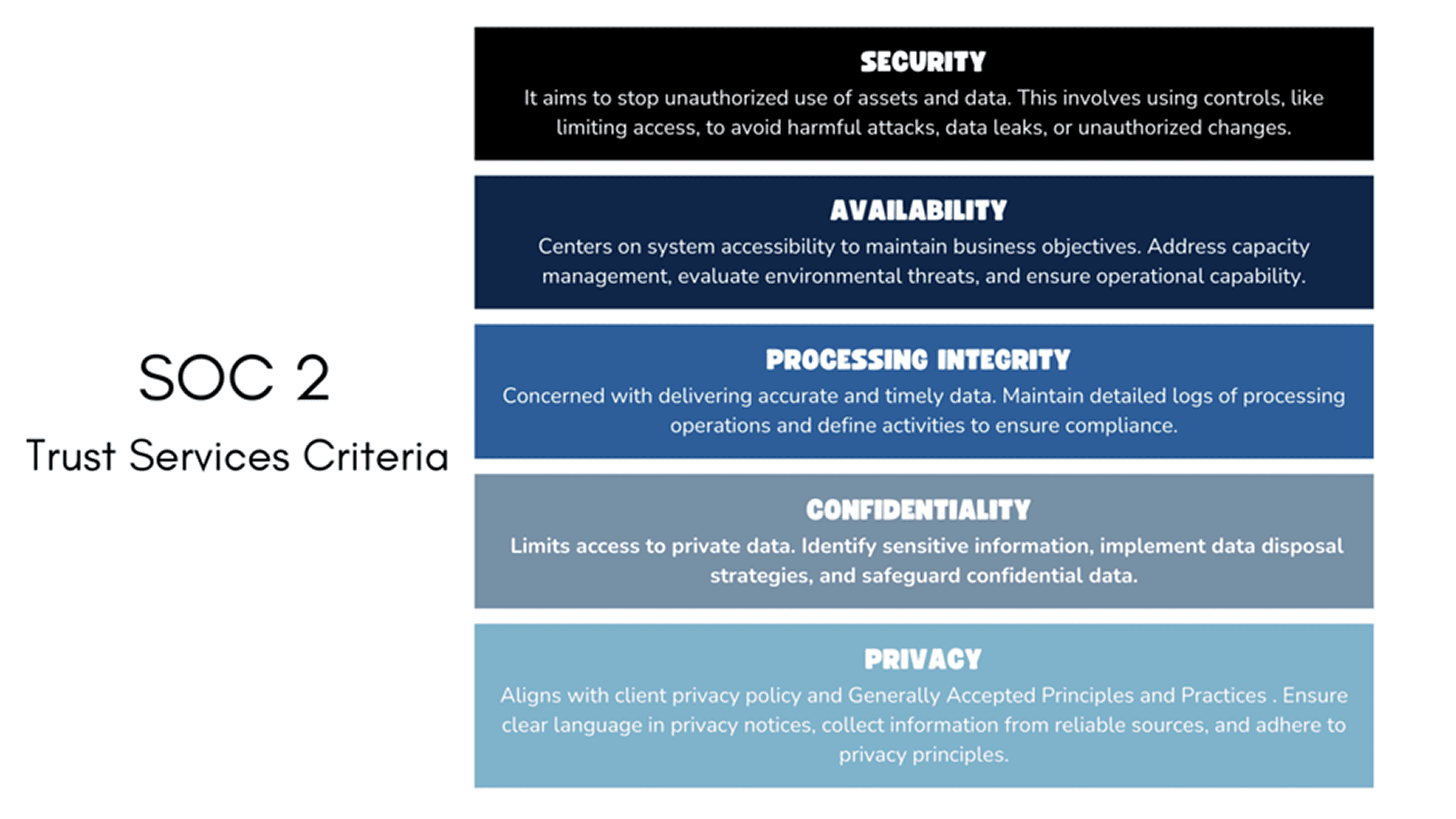
Security: It aims to stop the unauthorized use of assets and data. This involves using controls, like limiting access, to avoid harmful attacks, data leaks, or unauthorized changes.
Availability: Centers on system accessibility to maintain business objectives. Address capacity management, evaluate environmental threats, and ensure operational capability.
Processing Integrity: Concerned with delivering accurate and timely data. Maintain detailed logs of processing operations and define activities to ensure compliance.
Confidentiality: Limits access to private data. Identify sensitive information, implement data disposal strategies, and safeguard confidential data.
Privacy: Aligns with client privacy policy and Generally Accepted Principles and Practices. Ensure clear language in privacy notices, collect information from reliable sources, and adhere to privacy principles.
Documents required
The documentation process may vary based on the organization type, business operations, the scope defined, and the TSCs that are being addressed. Here is a general list of documents that are usually required for SOC 2 attestation.
Information Security Policy
Access Control Policy
Incident Response Policy
Data Retention and Destruction Policy
Change Management Policy
Vendor Management Policy
Data Privacy Policy
Risk Management Policy
Risk Assessment Report
Risk Treatment Plan
Access Control Matrix
User Access Policies and Procedures
Authentication and Authorization Procedures
Incident Response Plan
Security Incident Logs and Reports
Intrusion Detection and Prevention Documentation
Change Management Procedures
Data Handling Procedures
Data Classification Policies
Third-Party Risk Assessment Procedures
Vendor Due Diligence and Monitoring Policies
Contractual Agreements with Service Providers
Software Development Lifecycle (SDLC) Procedures
Code Review and Testing Documentation
Patch Management Procedures
Physical Security Policies
Data Center Access Logs and Security Reports
Encryption Policies and Procedures
Data Encryption Key Management Documentation
Network Architecture Diagrams
Network Security Policies and Procedures
Background Check Procedures
Security Training Records
Audit Trail Configuration and Monitoring Procedures
Log Retention and Review Documentation
On-boarding and Off-boarding process
organizational Chart
SOC 2 Type 2 Audit Reports (for previous years)
Internal and External Audit Reports
Get Started with SOC 2 Compliance in 10 Easy Steps
SOC 2 Compliance can be a challenging framework to conquer especially when there is an imposed evidence-valid period. However, the process can be eased by following a simple yet efficient checklist. Below mentioned are the steps that you can take to get started with your SOC journey. For a detailed step-by-step guide, Check out our in-depth blog post on “SOC 2 Checklist.
1. Defining the audit period (or reporting period)
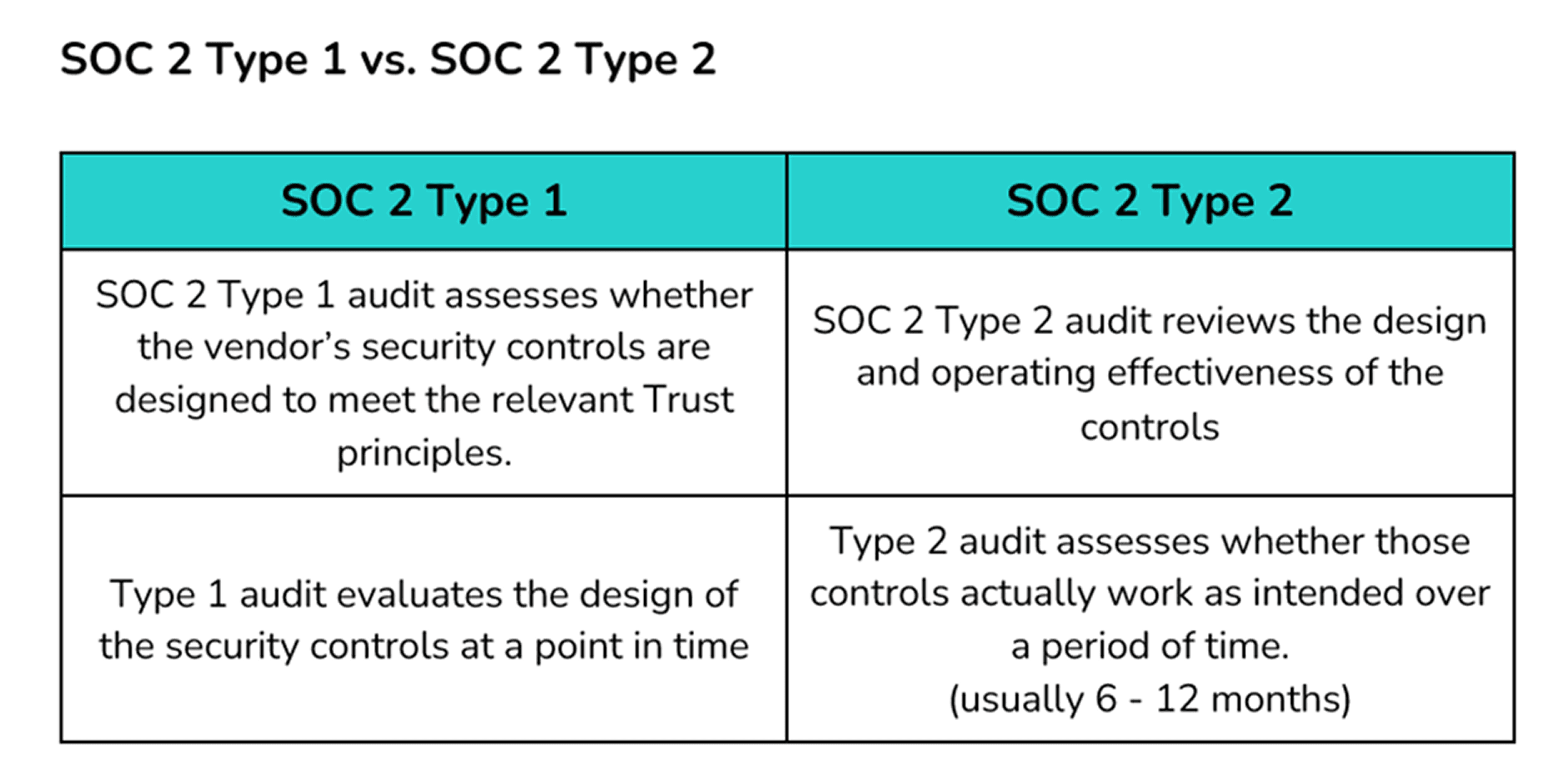
According to AICPA, a reporting period shorter than 6 months is not likely to be useful for organizations and the auditors in a SOC 2 audit. Define the audit period (between 6 - 12 months) before planning the SOC 2 audit. Whether you perform type I or type II, ensure that audits are conducted every 6 - 12 months to ensure regular compliance.
2. Planning and scope
Define the scope depending on the organization’s needs and requirements. Select the applicable controls from one or more of the given TSCs. The scope can be wider or narrower based on what is being analyzed.
3. Build a team
Path to SOC 2 certification is a challenging process and it might take several months to prepare and get attested. In order to move things smoothly, a dedicated compliance team is very much essential. Assign roles and responsibilities to users such as Project manager, security team, etc.
4. Readiness assessment
This crucial practice assists IT teams in identifying vital aspects of the control environment that need attention and improvement before conducting the formal audit.
5. Gap assessment
Gap analysis helps ensure that all essential controls are properly documented and in position. During gap analysis, an independent auditor can help assess your current environment and how it compares to the SOC 2 requirements and TSCs.
6. Gap remediation
After identifying the gaps and missing controls, remediate the gaps by implementing controls and procedures wherever required. Continuously monitor the implementation to ensure its effectiveness and functionality.
7. Preparing for the audit
Before performing the internal audit, make sure all the necessary controls are implemented and functioning the way it was intended to. Collect evidence for all the controls within the defined reporting period Perform any technical testing like VAPT and source code review if required and validate the report. Gather additional documents that might be required as a part of the SOC 2 documentation. Refer to the list of documents mentioned above.
8. Conducting Internal Audit
Conduct the Internal Audit with the help of an independent auditor. The auditor will review all the controls and documents and provide insight into the compliance status of the organization. All the findings will be consolidated in an internal audit report provided by the auditor.
9. SOC 2 attestation
Remediate gaps and risks that were identified during the internal audit. Approach an external auditor to perform the final evaluation for the SOC 2 report. If all the requirements are satisfied, you are ready to get the SOC 2 attestation report.
10. Continuous Improvement
Schedule and conduct audits periodically, every 6 to 12 months to stay compliant.
Simplifying the SOC 2 Audit Process
We at WhizzC work hard to make compliance a breeze. We specialize in automating and streamlining the entire audit process so our customers can be stress-free and stay compliant without any hassle.
Prep and get certified in under 30 days with WhizzC.