In the current highly regulated business landscape, compliance can make or break organisations
Compliance in simple terms, refers to a company adhering to the applicable rules and laws. This includes both country specific laws and the requirements from regulatory authorities.
Companies started embracing compliance after a series of scandals in the 1970s in the United states. This resulted in the passing of the Foreign Corrupt Practices Act or FCPA in the US. The issue of compliance has continued to grow in importance in the decades that followed.
Compliance is no longer just an option for organisations, it has become a requirement. New regulations and protocols are challenging the compliance status quo.
Why can it be challenging to get compliant?
And why is it crucial to overcome that challenge and get compliant ready?
Organisations need to be agile and stay up to date on the changing regulations. Otherwise, the consequence of non-compliance can be huge.
● Legal Penalties and Financial Loss
The effect of non-compliance can be manifested in the form of hefty fines. Even huge financial institutions and tech giants did not slip away from paying the legal fines. In 2020 alone, several banks in the US paid major fines amounting to $11.39 billion. Regulatory fines might erode big companies’ profits significantly whereas it can cause stiffer hits to smaller ones even making them wiped out of business. Besides, lawsuits and settlements can easily cost you thousands and millions of dollars.
● Legal actions and imprisonment
In rare instances of non-compliance, compliance officers have experienced direct regulatory and government enforcement measures. Since the financial crash of 2007-2008, there has been a notable rise in scrutiny from regulators and government agencies regarding the duties and obligations of compliance officers and organisations. Alongside imposing penalties on organisations, these entities are now enforcing individual accountability for any misconduct.
● Reputational loss
A non-compliance issue can put a company in a bad light. Negative publicity, customer complaints, and social media backlash can quickly spread, damaging your organisation's image. Rebuilding trust after a compliance breach can be challenging, and the impact may be felt for years.
● Loss of customers
As a result of reputational loss, gaining new customers can become gruelling. Non-compliance can lead to customer dissatisfaction, loss of trust, and ultimately, the loss of customers. Existing customers might switch to other competitors who are compliant.
● Employee dissatisfaction
Government agencies and regulatory bodies enforce rules and regulations that protect employees and the environment. If your business fails to meet these requirements, it may lead to discontent among your workforce. Employees may feel unsafe or undervalued and be subjected to unfair practices. Losing skilled employees due to non-compliance can be detrimental to your organisation's success.
Tips for startups on approaching ISO 27001
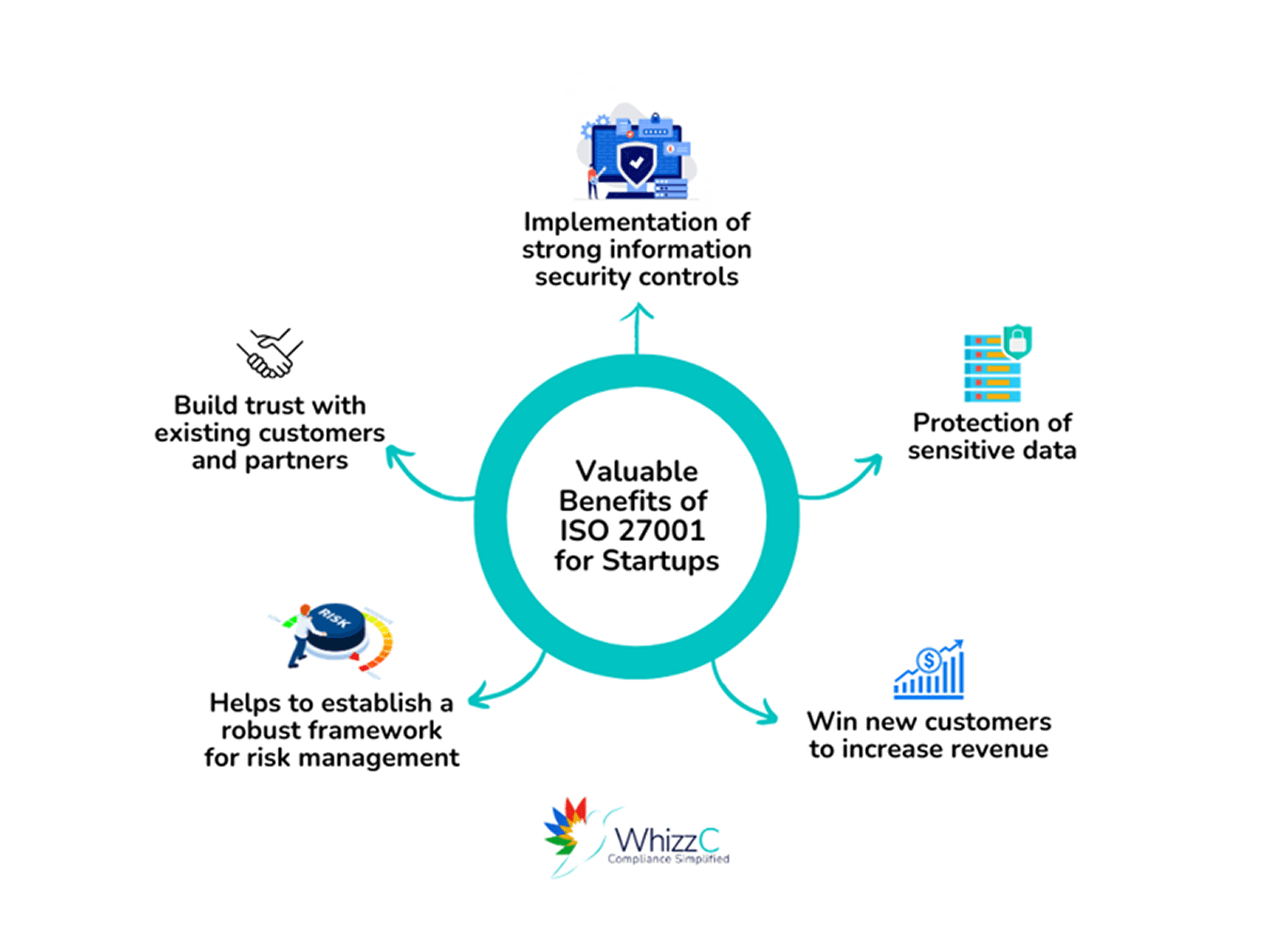
Small and Medium businesses face unique challenges compared to larger organisations. Allocating dedicated teams for compliance can be demanding and stretch their budgets thin. However, adapting ISO 27001 to their specific needs and resources is possible.
Define a focused scope. Focus on critical information assets and the most vulnerable areas that have the biggest impact on your business operations to ensure efficient use of resources.
Engagement from all team members is crucial to create a culture of information security.
Simplify the documentation process. Create guidelines that address the key security concerns and fulfils the requirements of ISO 27001.
Make use of existing resources. Look for existing security controls that align with the requirements of ISO 27001. Identify any gaps and make improvements.
Explore cost-effective technology solutions that can help automate and streamline security processes.
By adapting ISO 27001 to their specific needs, startups can gain effective ISMS without overwhelming their business functions.